Current relevance
Democracy under pressure
Representative democracy has come under pressure from several angles over the past 15 years.
- Disillusioned with politics: Many citizens can no longer identify with the programmes and political careerism of the established mainstream parties.
- Right-wing populism: As self-proclaimed representatives of the ‘silent majority’, whose interests are allegedly ignored by a political elite they regard as corrupt and power-hungry, right-wing populist parties attack social minorities, migrants and open societies. Right-wing populism rejects core elements of liberal democracies, such as pluralism, the protection of minorities and freedom of religion.
- Endangering the separation of powers: Some governing parties in Europe use their parliamentary majorities to enact provisions that undermine the foundations of the separation of powers in their respective countries (for example, disciplinary measures against judges or changes to electoral constituencies).
- By providing information and opportunities for digital participation, the internet greatly facilitates political participation and informs political opinion. On the other hand, the sheer abundance of options can be overwhelming, and the risk of misinformation and deception is high.
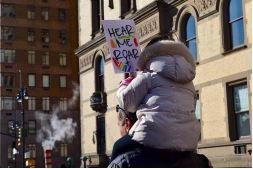
Image by Robert Jones/ Pixabay 1 https://www.populismstudies.org/Vocabulary/right-wing-populism/
https://www.bpb.de/apuz/286506/das-wahre-volk-gegen-alle-anderen-rechtspopulismus-als-identitaetspolitik,
zuletzt aufgerufen am 27.2.2026; Frank Decker/Marcel Lewandowsky, Rechtpopulismus: Erscheinungsformen,
Ursachen und Gegenstrategien.
https://www.amadeu-antonio-stiftung.de/en/right-wing-extremism-and-populism/
What is democracy?
What is democracy?
Enjoy the explainity-video
In a democracy, citizens, as members of a political community (such as a local authority, a state or the EU), determine who is permitted to exercise power and according to which rules, values and objectives (this is known as popular sovereignty).
State power is either exercised directly by the citizens (direct democracy) or delegated to elected representatives (representative democracy). Hybrid forms also exist.
Any exercise of state power must be in the interests of all citizens and in accordance with the values and rules established by them.
What are typical features of a democracy?
- Periodic elections and peaceful transfer of power
- Political equality of all citizens and the participation of individuals and groups in political opinion-leading and decision-making
- Recognising the diversity of opinions in society (pluralism), freedom of expression and freedom of the press
- Accepting the temporary ‘rule of the majority’ over the minority for the benefit of the community
- Separation of powers
- Rational, accountable and lawful exercise of power
- Political compromise as the result of (often protracted) negotiations between political interest groups
There is no such thing as ‘the’ democracy
There are many different forms of democracy.
Most European countries apply a model called ’representative majoritarian democracy’: political parties compete in elections for the votes of citizens in order to secure a majority in the parliamentary assembly. With the exception of Switzerland, there are few elements of direct democracy, such as referendums; these are mostly found at the local or regional level. In European democracies, the protection of the individual and their rights against state arbitrariness, as well as the separation of powers between the legislative, executive and judicial branches are of paramount importance.
Democracy – a system for participation
Democracy thrives on participation. Participation begins with ensuring in one’s own daily life that human and minority rights are not infringed upon. Forming one’s own opinion on changing political issues and being allowed to voice said opinion is not an obligation in democracies – but a civil right sorely missed in dictatorships. When discussing matters with others, one should adhere to democratic rules: listen, respect other opinions, argue rather than rant, and be willing to compromise. Being a member of a political party is one way of keeping democracy alive. Alternatively, we can get involved in a politically active group; these interest groups, too, fulfil important functions in shaping public opinion within pluralistic societies.
Each citizen has a responsibility to be critical and attentive. Democratic forms of government are not sacrosanct, nor are they so robust that they can withstand all challenges, upheavals and crises (cf. Vorländer, 2017:5).
Democracy in the European Union
A ‘supranational’ democracy – that’s a first

Pixabay
The European Union (EU) is required to base its policies on democratic standards – although there is as yet no global precedent for a democracy spanning several nation states. However, there are democratic political systems that share similar structural features with the EU: federal states.
In these, too, formerly independent (sovereign) constituent states are united under a common constitution and have shared institutions that are appointed according to democratic procedures and that make decisions.
Federal states derive their democratic legitimacy
- from democratic decisions regarding the basic rules governing the exercise of power at the federal level
- from democratic legitimacy in the respective constituent states
- from democratic appointment of members to the joint bodies and institutions
- rom democratic and constitutional procedures in law-making and implementation
The EU resembles a democratic federal state in that:
- ll Member States must be functioning democracies; their governments change in accordance with national election results.
- EU legislation operates under a two-chamber system: the directly elected European Parliament, whose composition is determined by all EU citizens in direct elections every five years and who participates in almost all legislative procedures on an equal footing. The Council of Ministers, in which the relevant ministers of the Member States are represented, acts as the second house. Pieces of legislation are created when both institutions agree to a proposal from the Commission.
- There is a clear separation of powers within the EU’s political system (legislative power = European Parliament and Council; executive power = Commission and Member States; judicial power = Court of Justice of the European Union)
- he European Parliament monitors whether the European Commission acts in the interests of EU citizens and in accordance with the EU’s values and principles. It can remove the Commission from office by means of a vote of no confidence.
- Mechanisms and procedures are based on the rule of law.
Some commentators fundamentally deny the EU’s ‘capacity for democracy’, arguing that there is no ‘European people’. It is true that there are no models for democratic systems that do not rely on populations who share at least a common language they can use to discuss shared political concerns
However, what is crucial for establishing a democracy is that people see themselves as citizens of a political community whose rules for exercising power they themselves determine and whose political leadership can be changed through elections. These procedures exist at the EU level. There is still room for improvement, because the EU is only slowly evolving from a functional community of states (based solely on negotiations between national governments) into a political community of EU citizens.
4 Peter Graf Kielmansegg, 1996: Integration und Demokratie; in Markus Jachtenfuchs / Beate Kohler-Koch
(Hrsg.), Europäische Integration, Opladen:47-71
What are the most important areas for democratic reform in the EU?
EThere has never been an EU-wide constitutional referendum on the common rules governing the exercise of power. This is because the EU has gradually evolved from an association of states based on international treaties into a political union based on constitutional-style treaties.
- For historical reasons, only the European Commission can officially propose legislation within the EU. The European Parliament lacks this formal right of initiative.
- There is no uniform European electoral law; instead, the European Parliament is elected according to 27 national electoral laws, some of which are very different to one another, which sometimes has discriminatory effects towards voters. The European Parliament has long wanted to introduce a uniform EU-wide electoral law for its elections5, but the governments of the Member States have so far blocked the required EU legislation.
- The EU and its institutions are multinational, and it is important that all nations are represented within them. This is why each nation has, for example, at least six MEPs in the European Parliament (e.g., Malta, Luxembourg). As the entire European Parliament may not have more than 750 members, this results in voters from smaller Member States being over-represented in the European Parliament.6 This contradicts the democratic principle of the equality of all votes. But what would the alternatives be? Either the Maltese, due to their small population, would have no MEP, which would be completely undemocratic. Or the European Parliament would have to be vastly expanded: there would need to be around 6,760 MEPs7. Such a congress of nations would not be feasible and far too costly.
- The European Council, comprising the heads of state and government of the Member States, plays an increasingly important role in shaping EU policies: it sets political guidelines, takes increasingly far-reaching decisions in times of crisis and makes key personnel decisions – all this without being subject to effective scrutiny by the European Parliament or national parliaments.
- The idea that the EU, too, should be a ‘defensive democracy’ still requires further elaboration. Existing procedures, such as Article 7 TEU, which allows a Member State’s voting rights to be suspended in the event of persistent breaches of the EU’s interests and values, prove very difficult to be implemented and also exclude the European Parliament from the decision-making process.
5 Art. 223 TFEU
6 In mathematical terms, each of the 96 German MEPs represents around 855,000 voters, whereas an MEP from Malta only represents around 66,000. This method of vote distribution is known as ‘degressive proportionality’, meaning that the more voters a country has, the less representative its representation is..
7 Calculation based on 446 million EU citizens, with one MEP for every 66,000 citizens (taking Malta as the basis)
For more information on the development of the EU democracy have a look at https://eu-democracy-reform-observatory.eu/
Learning and Play Area
Learning with tips, quizzes and interactive elements.